

Description
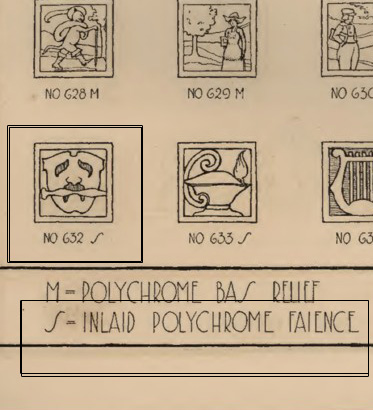
Catalog Design No. 632 S – Inlaid Polychrome Faience**
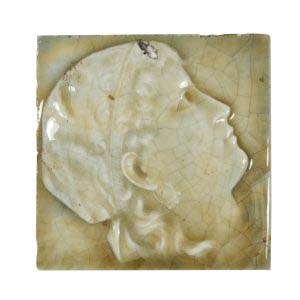
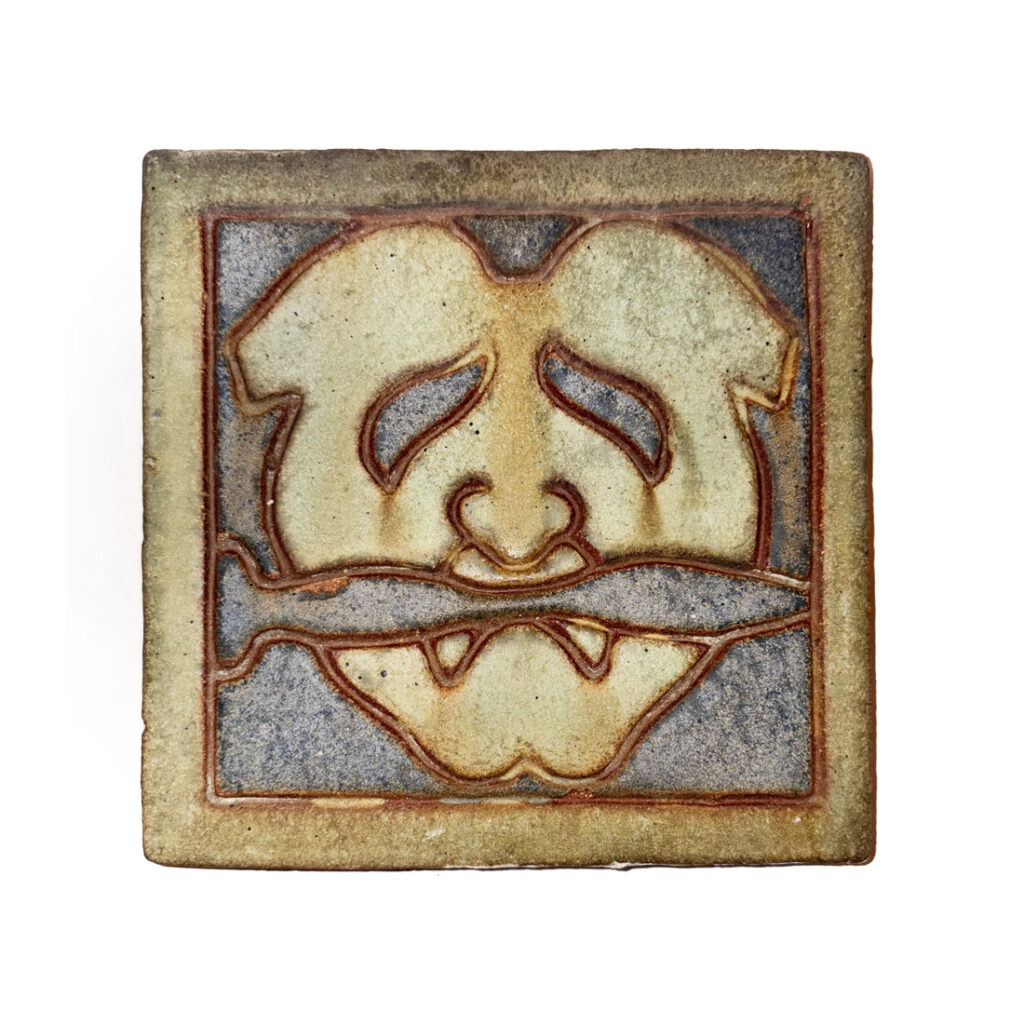
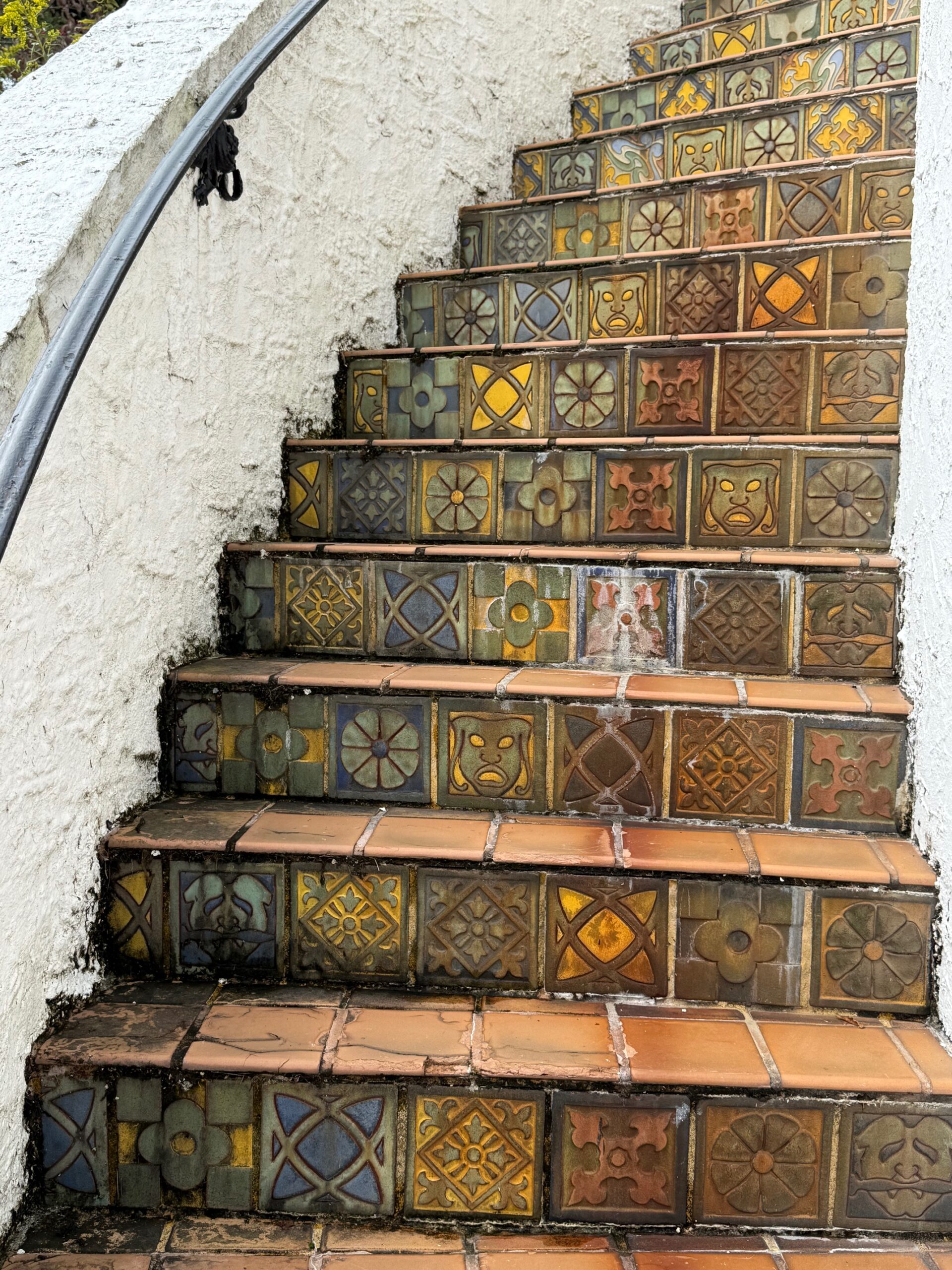
A distinctive 6×6 pressed-relief tile by Mueller Mosaic Company of Trenton, New Jersey, salvaged from the historic Windsor House—also known as the Castle Above the Clouds—on Lookout Mountain, Tennessee. Installed during the home’s lavish 1930s construction, this piece formed part of an extraordinary Arts-and-Crafts–era architectural commission in which Mueller supplied both custom work and catalog designs throughout the residence.
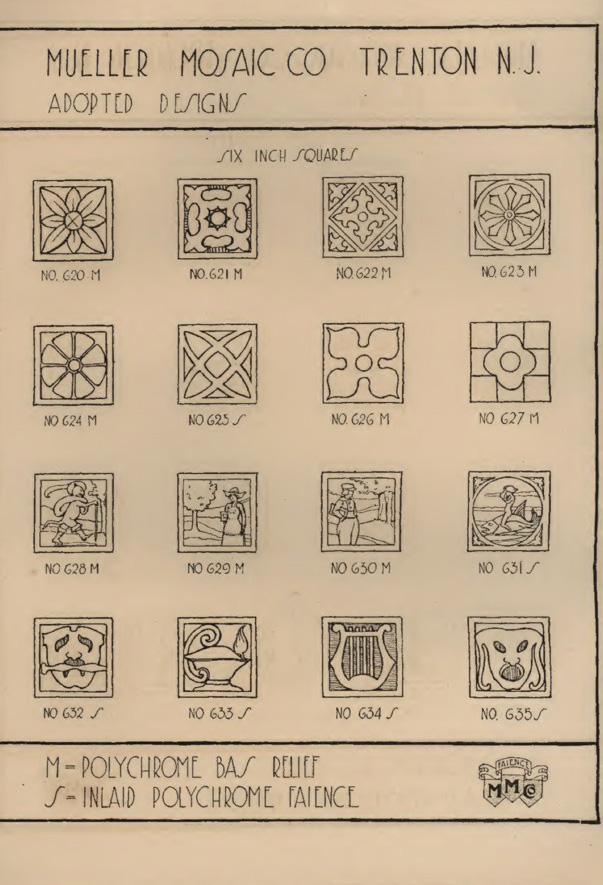
This tile corresponds directly to the published Mueller catalog as Design No. 632 S, classified as Inlaid Polychrome Faience. The catalog image shows the same stylized theatrical grotesque biting a horizontal bar, confirming the design’s authenticity and placement within Mueller’s formal production line.
The tile features a grotesque mask motif, sculpted in deep, fluid relief with the crisp mold definition strongly associated with Mueller’s mid-1930s work. Its expressive features—arched brows, exaggerated contours, and the bar clenched between the teeth—reflect the period’s fascination with medieval revival imagery and theatrical grotesques meant to serve as symbolic guardians in fireplaces, stair risers, fountains, and architectural accents.
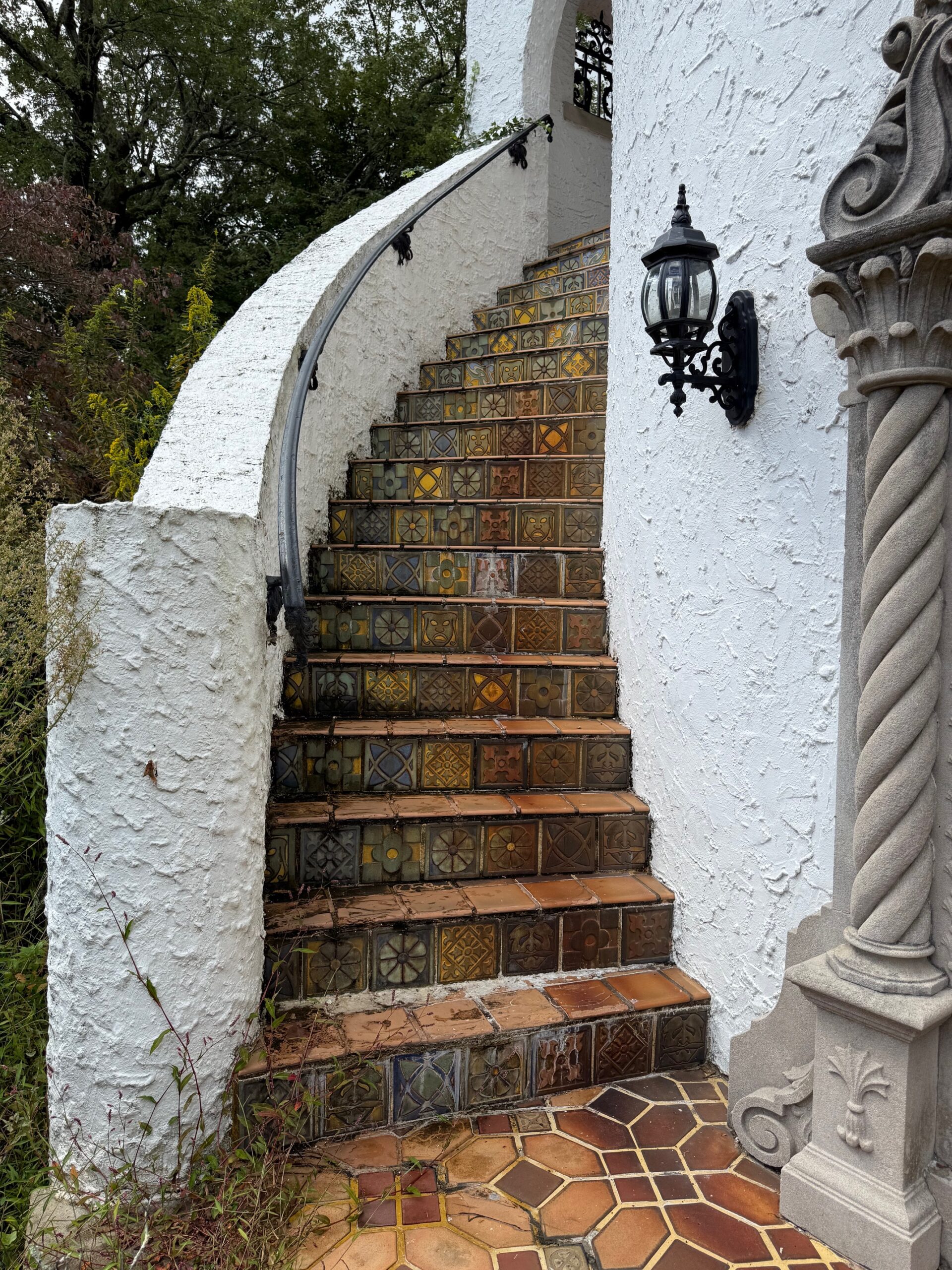
This tile was salvaged from the Windsor House, an extraordinary 1930s hilltop estate built by George and Elizabeth Scholze, of the prominent Scholze Tannery family of Chattanooga. Designed during Tennessee’s brief but notable embrace of Spanish and Mediterranean Revival architecture, the residence was richly appointed with custom ironwork, elaborate stained glass, and an exceptional array of Mueller Mosaic Co. tiles placed throughout its stairways, fireplaces, fountains, and decorative wall programs.
The interior featured one of the most extensive and artistically ambitious decorative tile installations of its era in the region—executed with a level of craftsmanship and expense rarely seen outside California’s major tile-producing studios. As the Windsor House now undergoes dismantling and salvage, surviving tiles such as this catalog-listed No. 632 S example represent a rare, historically significant remnant of the estate’s original 1930s decorative program.